

About the Project
News
First week of the I-5 shutdown: Here’s how it’s going
Traffic Report: Delays increasing over first week
Since the closure began last Friday, our traffic teams have been monitoring traffic patterns. We have some initial observations from the first week.
We started off strong with a minimal increase in travel time over the weekend, but we’re seeing travel times increase as drivers return to the highway system. If this trend continues, traffic will continue to worsen. Consider your options to take transit, carpool, shift the time of day you travel, or avoid the area. The more people who adjust their habits during this closure, the better it will be for people who do not have flexibility to adjust their trip, including emergency responders and freight. This closure could last up to five weeks. This is a marathon, not a sprint. You can find more information about how to get around on the Closure Travel Resources page and the City of Portland’s Shift Your Trip page. Check TripCheck before you head out for the latest travel conditions.
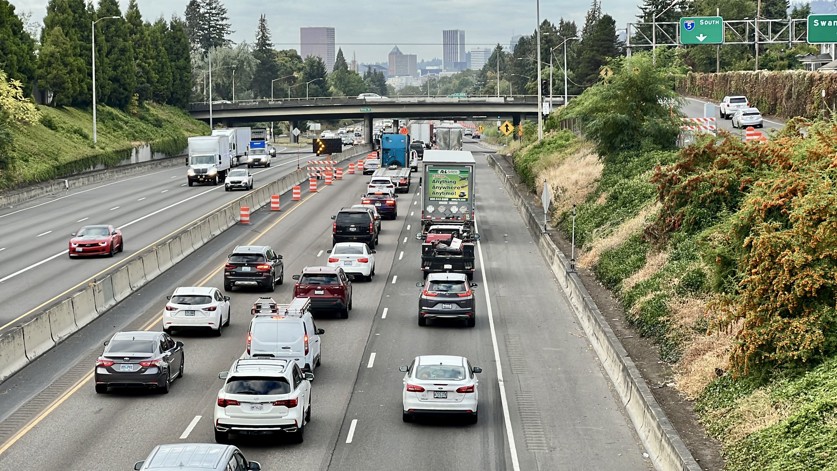
Monday traffic north of the I-5 closure as work begins on the southbound Ianes of I-5 in the Rose Quarter.
I-5 Southbound: Average travel times on I-5 southbound increased from 1.4 times longer than usual on Monday to 1.6 times longer on Wednesday. At PM peak hour, travel times have reached up to two times longer. Travel times on I-5 southbound remain greater than usual all day. It seems that many people stayed home or avoided the area in the first few days, but are now returning to the system, increasing travel times.
We are encouraged to see that people are shifting their travel time and route, leaving earlier or later than usual. Morning and afternoon rush hour is longer than usual, with morning travel congestion beginning as early as 5 a.m. and evening congestion continuing until 7 p.m. and later.
Alternate Routes: I-405 southbound, I-205 southbound between the Columbia River and I-84 junction, and I-84 westbound have also seen travel times increase over the course of the week.
Local Streets: We are experiencing increases in traffic on some local streets, notably the St. Johns Bridge, N Interstate Avenue, N Greeley Avenue, N Vancouver Avenue, and NE Martin Luther King Jr. Boulevard. PBOT is making adjustments to some traffic signals in response to these observations. PBOT reports that neighborhood streets and greenways are not experiencing a notable increase in traffic. Thank you for avoiding these areas!
Heads up: I-5 closure extends to Marquam Bridge overnight for three nights
On the nights of Sept. 21, 22, and 23, the ramp from I-84 westbound to I-5 southbound will be closed between 10 p.m. and 5 a.m., extending the existing I-5 southbound closure about 1.25 miles to the junction at I-405 on the Marquam Bridge. ODOT maintenance crews will complete required 2-year maintenance inspections of the Marquam Bridge.
Detour Routes: All overnight westbound traffic from I-84 will be directed to I-5 northbound. Detour routes will be clearly signed. The ramp from I-84 westbound to I-5 southbound will remain open during daytime hours. More information is available on the Construction Travel Impacts page.
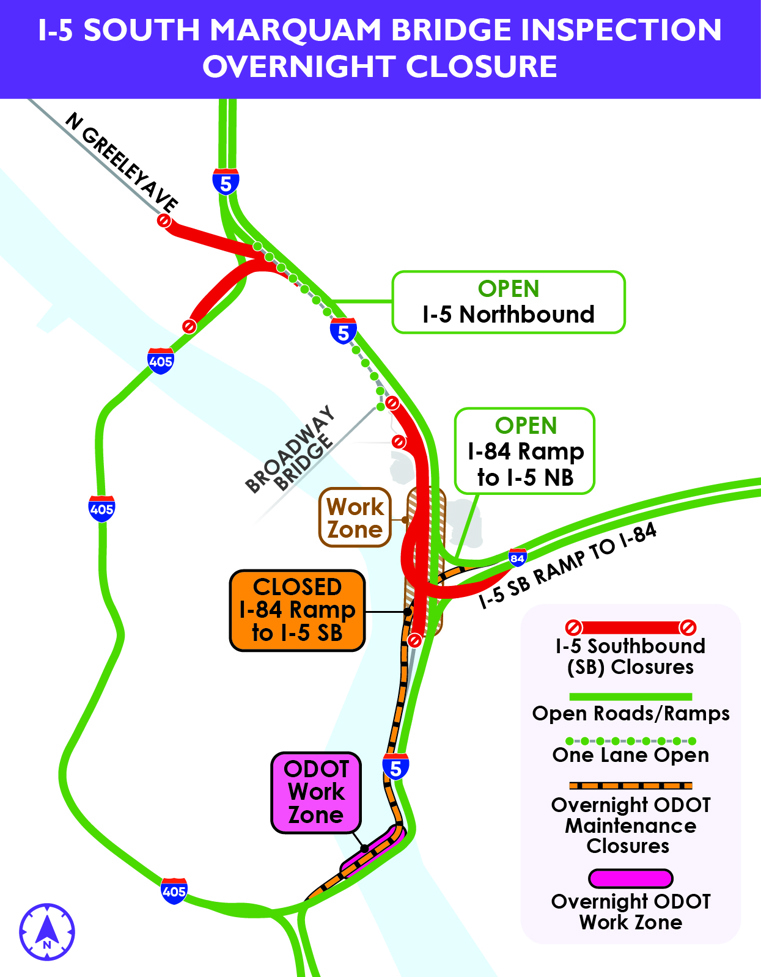
Visit our Construction Travel Impacts page for more information about concurrent closures. Sign up for email and/or text alerts to stay up to date with the latest news on traffic impacts and active closures.
Construction Progress: Out with the old
After the first week of closure construction, we are currently on schedule.
At the end of this closure, your southbound trips on I-5 will be smoother and safer. The first step to getting there requires us to remove the old, pitted and potholed top layer of concrete. That’s where micromilling comes in.
Micromilling involves a machine that uses sharp points and vibration to grind off the top two inches of the old concrete. During the first closure weekend, crews had to carefully remove just enough concrete to allow for a full repaving, but not so much that structural rebar got exposed underneath. The micromilling process was completed on Sunday, Sept. 13, just two days after the closure kicked off. Crews are now using hand tools to complete concrete removal in areas the bigger micromilling machine couldn’t reach. Repairs to the underlying structural layer are ongoing.
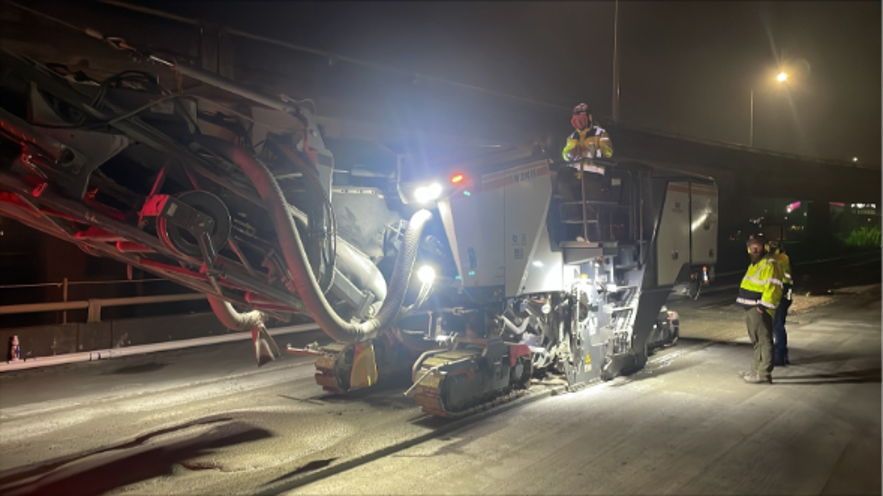
After micromilling was completed, crews began hydroblasting. I-5 Rose Quarter crews are essentially pressure-washing the road using 20,000 pounds-per-square-inch of water pressure to remove an additional half-inch of concrete. Hydroblasting is necessary to rid debris and prep the area.
Next week, I-5 Rose Quarter crews will pour concrete for the new overlay over multiple days. Each concrete pour will take about four days to cure. After that, crews will sawcut a texture into the concrete overlay to improve safety and traction, install new bridge joints, and place new lane striping prior to reopening the interstate for traffic.
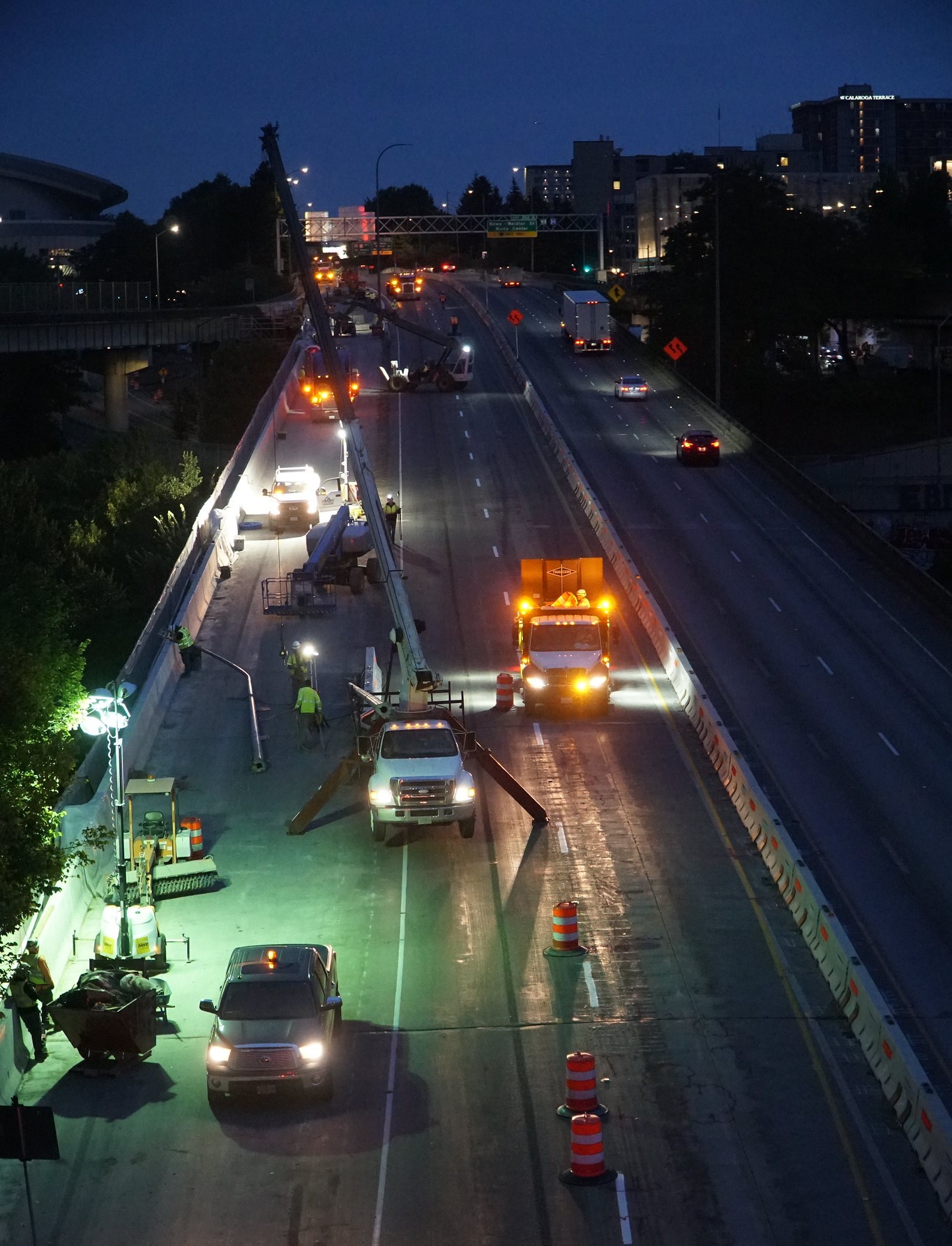
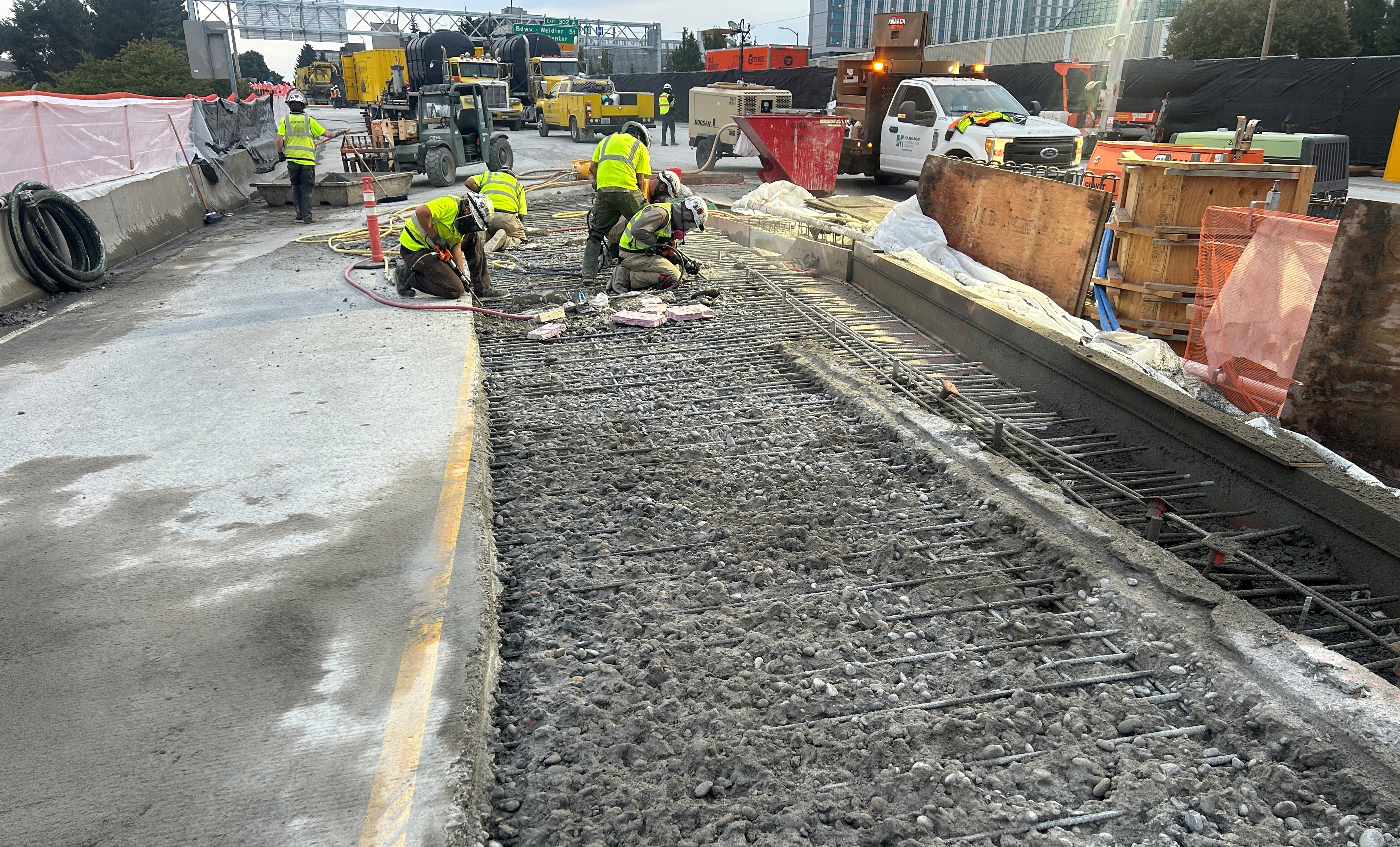
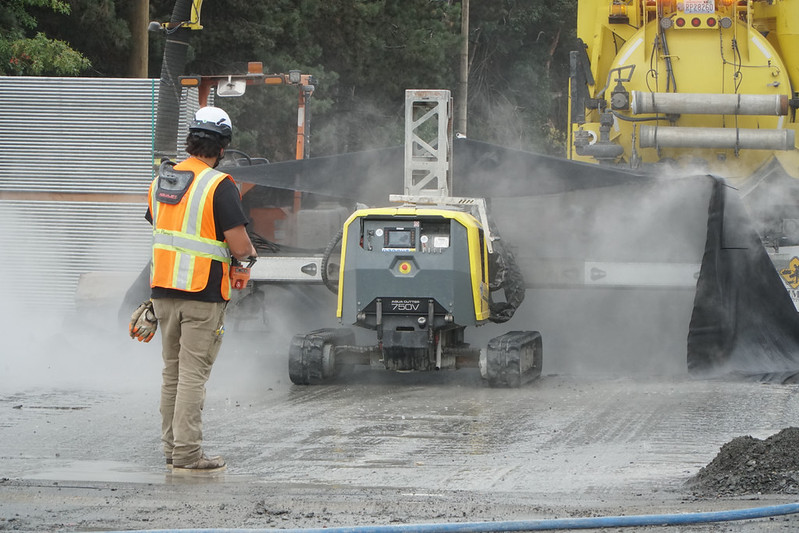
Crews staging the I-5 southbound closure, hand demoing for gore work and hydroblasting to remove access debris from the bridge deck.
See a video of hydroblasting work here.
Visit our Construction Travel Impacts page or sign up for text alerts to stay up to date with the latest news on traffic impacts and active closures.
Your questions, answered
Here are some of the top questions we’ve received since the closure began on Sept. 11:
Q: What’s the best route for me to get from point A to point B?
A: Congestion will be hard to predict day to day during the closure, so navigation apps like Google, Apple, and Waze will be your best tools for figuring out the best and quickest routes for daily travel during the closure. We also encourage you to shift to alternate modes of transportation during the closure whenever possible. This can include carpooling, using public transit, or taking that bike out of storage. Finally, adjusting your travel time may help you avoid delays. We have created a travel resources page (https://www.i5rosequarter.org/closure-travel-resources/) to help people plan their trips.
Q: How much could weather impact the closure schedule?
A: Typical fall rain will likely not create any delay, while significant prolonged rain or severe weather could cause delays to construction.
There are several steps involved with the work to repair the highway and most are not impacted by rain. Concrete pouring and re-painting lane lines are the most sensitive to wet weather. The contractor has developed contingency plans to work through normal wet weather for both the concrete pouring and curing and lane painting. However, the more severe the weather, the more delay it could cause.

Translation/Interpretation Accommodations
For ADA Title II or Civil Rights Title VI accommodations, translation/interpretation services or for additional information call 503-731-4128, TTY (800) 735-2900 or use the statewide Oregon Relay Service: 7-1-1.
Si desea obtener información sobre este proyecto traducida al español, sírvase llamar al 503-731-4128.
Если вы хотите, чтобы информация об этом проекте была переведена на русский язык, пожалуйста, звоните по телефону 503-731-4128.
如果您想瞭解這個項目翻譯成 繁體中文 的相關資訊,請致電 503-731-4128.
如果您想了解这个项目翻译成 简体中文 的相关信息,请致电 503-731-4128.
이 프로젝트에 관한 한국어로 된 자료 신청방법 전화: 503-731-4128.
Nếu quý vị muốn thông tin về dự án này được dịch sang tiếng Việt, xin gọi 503-731-4128.

For 24/7 road conditions and traffic alerts visit tripcheck.com or call 5-1-1.
Visit the Portland Area Construction Information website for more information about projects in construction.